Journal •
Unlocking the potential for adaptive reuse and sustainable, scalable urban transformation
By Anne Lynch, BArch, FRIAI
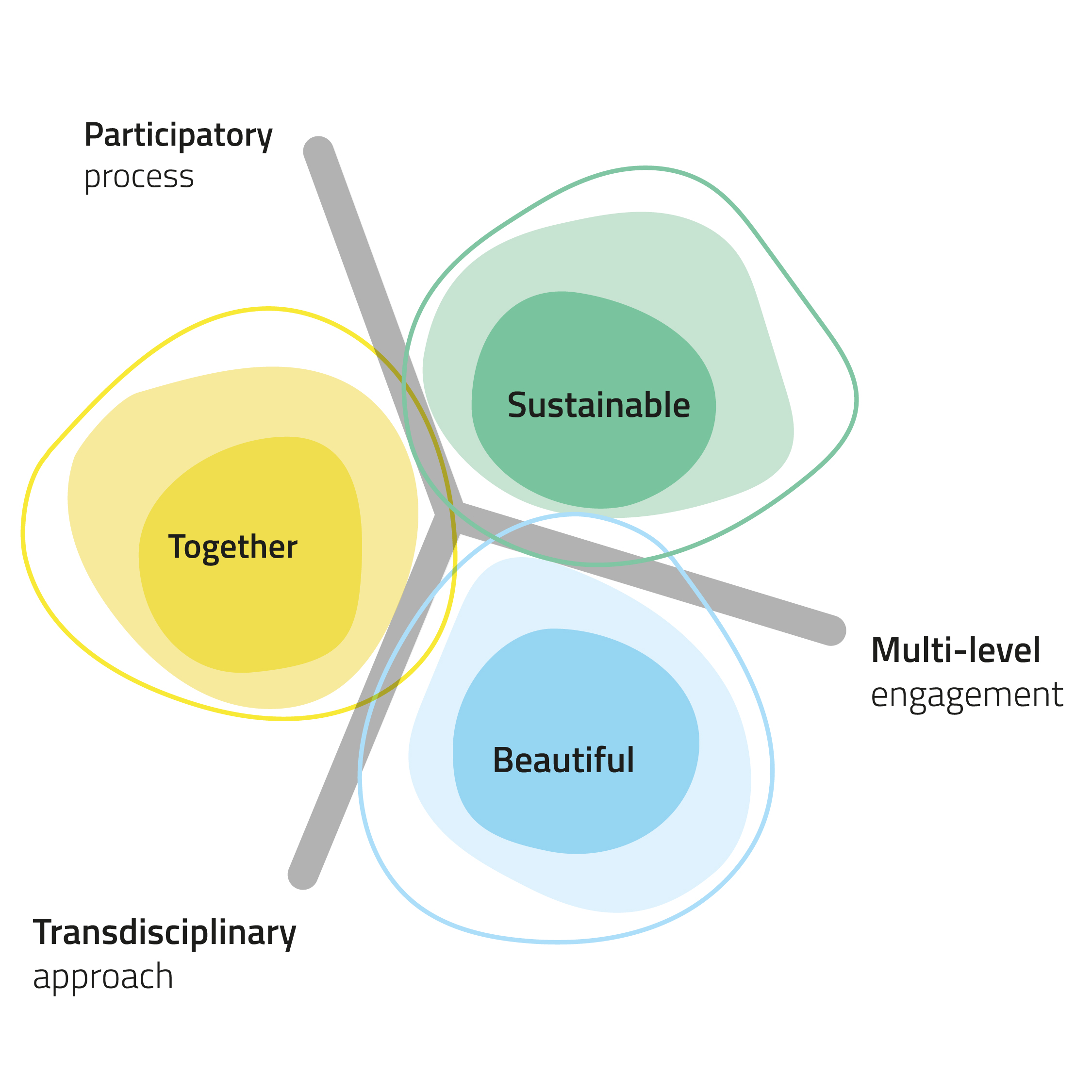
While researching for an MSc paper about the circular built urban environment, I discovered a significant number of contemporary studies dedicated to investigating and developing solutions to address the chronic dereliction facing our towns and cities. The climate crisis and current housing shortage have brought the issue into sharp focus. The Town Centre First strategy launched in 2022, guided and supported by the visionary 2021 New European Bauhaus (NEB) policy and associated funding initiatives — the Town Centre Heritage Revival Scheme (THRIVE) and the Vacant Property Refurbishment Grant — aspires to address the problem, but progress is slow on the ground.
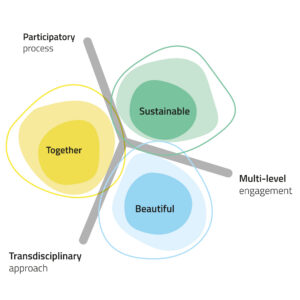
Figure 1. NEB Compass. Values and working principles (Source: NEB Toolbox, 2024, p. 2)
Ironically, a key obstacle to progress can be attributed to what is commonly known as Maslow’s hammer: “I suppose it is tempting, if the only tool you have is a hammer, to treat everything as if it were a nail” (Maslow, A.H. 1966, The Psychology of Science, p. 15-16).

Figure 2. Maslow’s hammer (Source: Author)
The regulatory, legal and financial environment within which construction projects are delivered is primarily based on new-build activity. Unfortunately, the instruments used in this process do not always take account of the added complexity of adaptive reuse projects and can sometimes act as a development constraint. Significant modification of these tools is required to embrace the parallel process crucial to the successful adaptation of existing buildings that can lead to urban transformation.
The paper that I developed examines the logjam that interrupts the flow from policy to practice, summarises common findings from recent and ongoing national and international research and best practice and uses a participatory research approach to apply those findings to the local context of Dún Laoghaire-Rathdown (DLR) town centre. It proposes a set of awareness-building initiatives to run in parallel with and enhance ongoing wide-ranging technical research with the aim of developing a robust template of measures to accelerate urban transformation. The study is set in the context of the opportunities offered by the embryonic outreach hub of the Rediscovery Centre (RDC, the National Centre for the Circular Economy) in DLR and the adaptive reuse of two historically significant buildings in DLR under the THRIVE funding initiative.
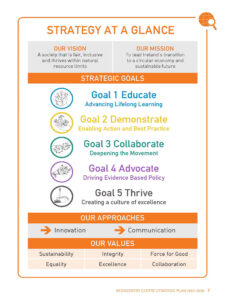
Figure 3. RDC Strategic Goals (Source: RDC Strategic Plan 2022-26, p. 7)
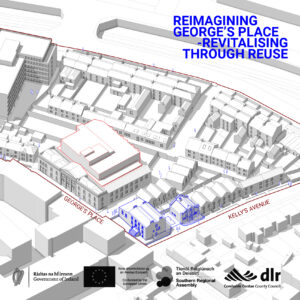
Figure 4. Reimagining George’s Place (Source: AP+E, Prescience and Livia Hurley)
The completed paper, ‘From policy to practice, unlocking the potential for adaptive reuse and sustainable, scalable urban transformation’, was submitted as part of the requirements for the MSc in Circular Economy Leadership for the Built Environment at Atlantic Technological University, Galway, in May 2026.