Journal •
Entropic Architecture: Layers of History at Open House Athens
Athens held a certain fascination for me as a city steeped in history and mythology. When I arrived at 2AM on a Friday, I was confronted with the real city. Even at that time in the morning, there was a traffic jam outside my hotel and crowds of young people chatting on the footpath. During the day, motorbikes sped by, kicking up dust, men sat on stools selling air-pump jumping spiders, and locals lost their temper at tourists confused by the metro. The parks were full of poppies, orange trees, and unfamiliar, unpronounceable flowers. The history was there, of course, and in no other city have I seen ancient ruins incorporated into public space as seamlessly as they are in Athens, but this was a modern city with layers and contradictions. A lot had taken place since the days of Homer.
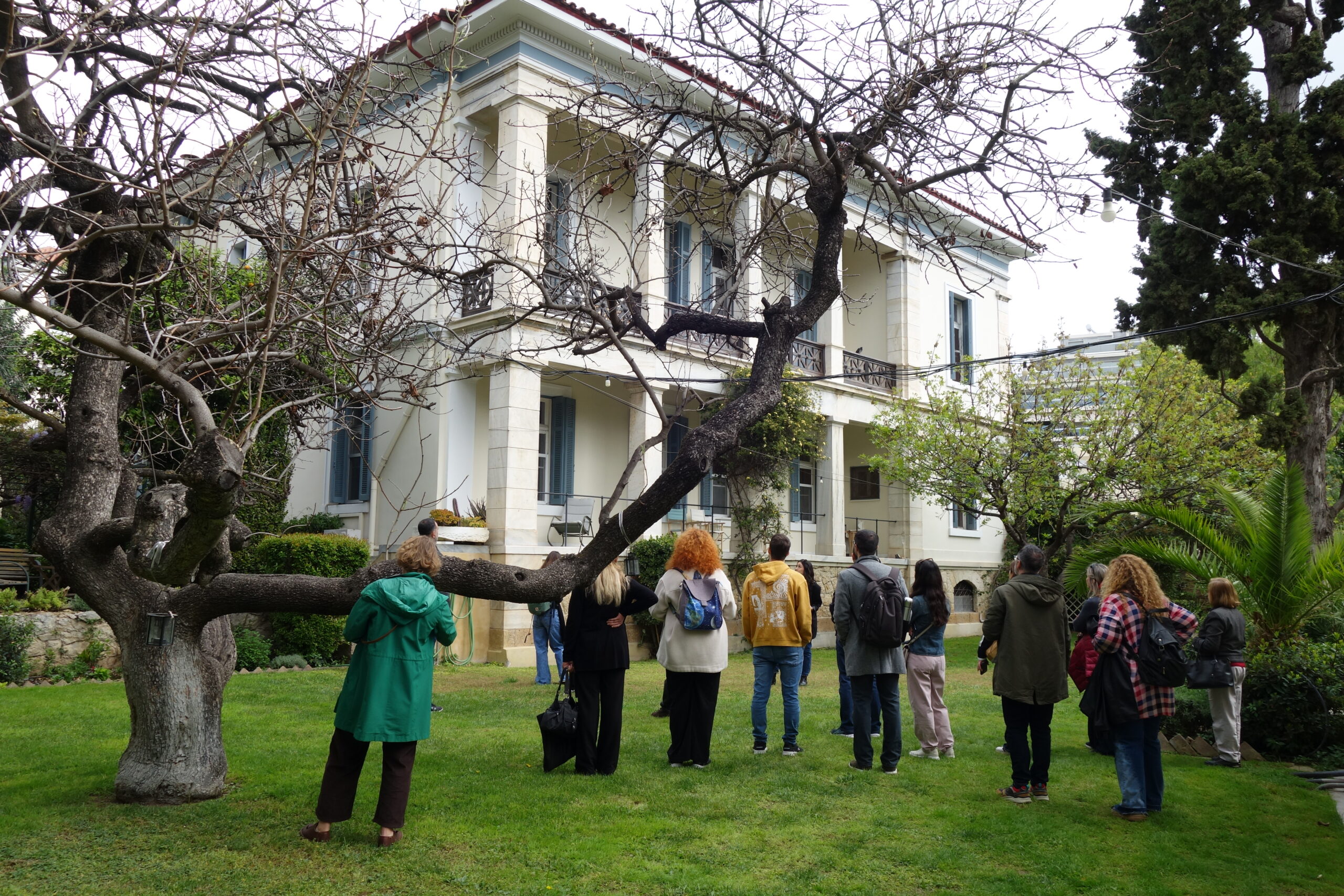
I spent my first day volunteering at the British School at Athens (BSA), a UK-registered charity which promotes the study of Greek art and history. The tour began at the Upper House, a neoclassical building designed by the School’s first Director, Francis Cranmer Penrose. We then moved on to the MacMillan Hostel and the Fitch Laboratory, passing beautiful gardens along the way. A highlight for me was seeing the Penrose Memorial Library. As a librarian in training, I admired how the space had been designed to protect the collection from light and fluctuations in temperature, while remaining a comfortable working environment for researchers.
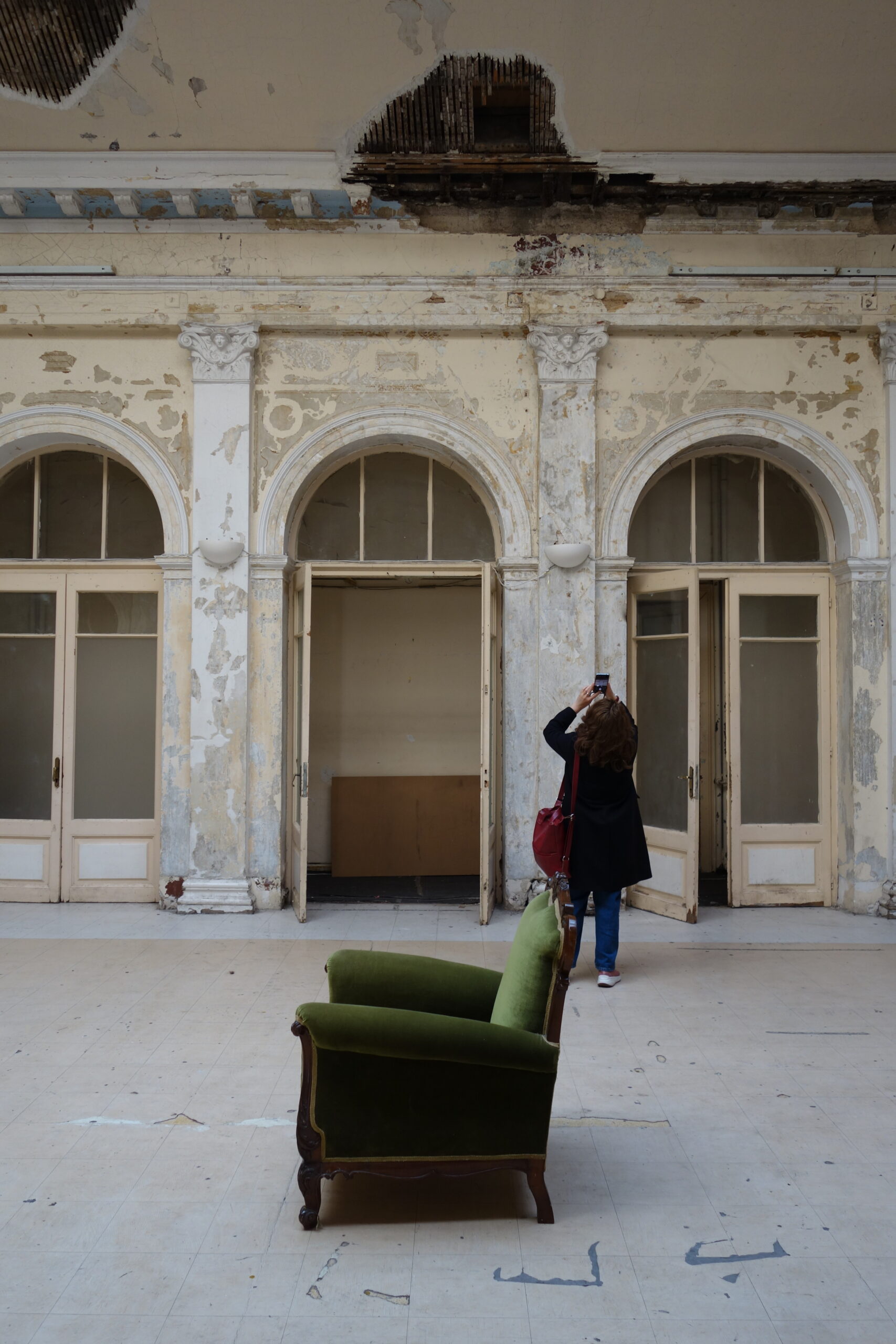
The next day, I volunteered at Bageion, a neoclassical building on Omonia Square designed by Ernst Ziller. The building has had several functions over the years: it was a hotel, the private residence of former Prime Minister Charilaos Trikoupis, and, most recently, an educational institute. After closing in 2002, it fell into disrepair and is now used for cultural events, theatrical performances, and exhibitions. As with the BSA, there was huge interest in the building, with hundreds of people queuing up for the Open House tour. One of my favourite parts of the exchange programme was speaking to the visitors, the majority of whom were locals. When the tour guide announced that I had travelled from Ireland to volunteer at the festival, the tour group turned to me and smiled. One man approached me to tell me about his Irish daughter-in-law, while others tried to teach me Greek words (with little success). Between the tour groups and the volunteer coordinators, who arranged a busy schedule of social events for us in the evenings, I felt very welcome in Athens.
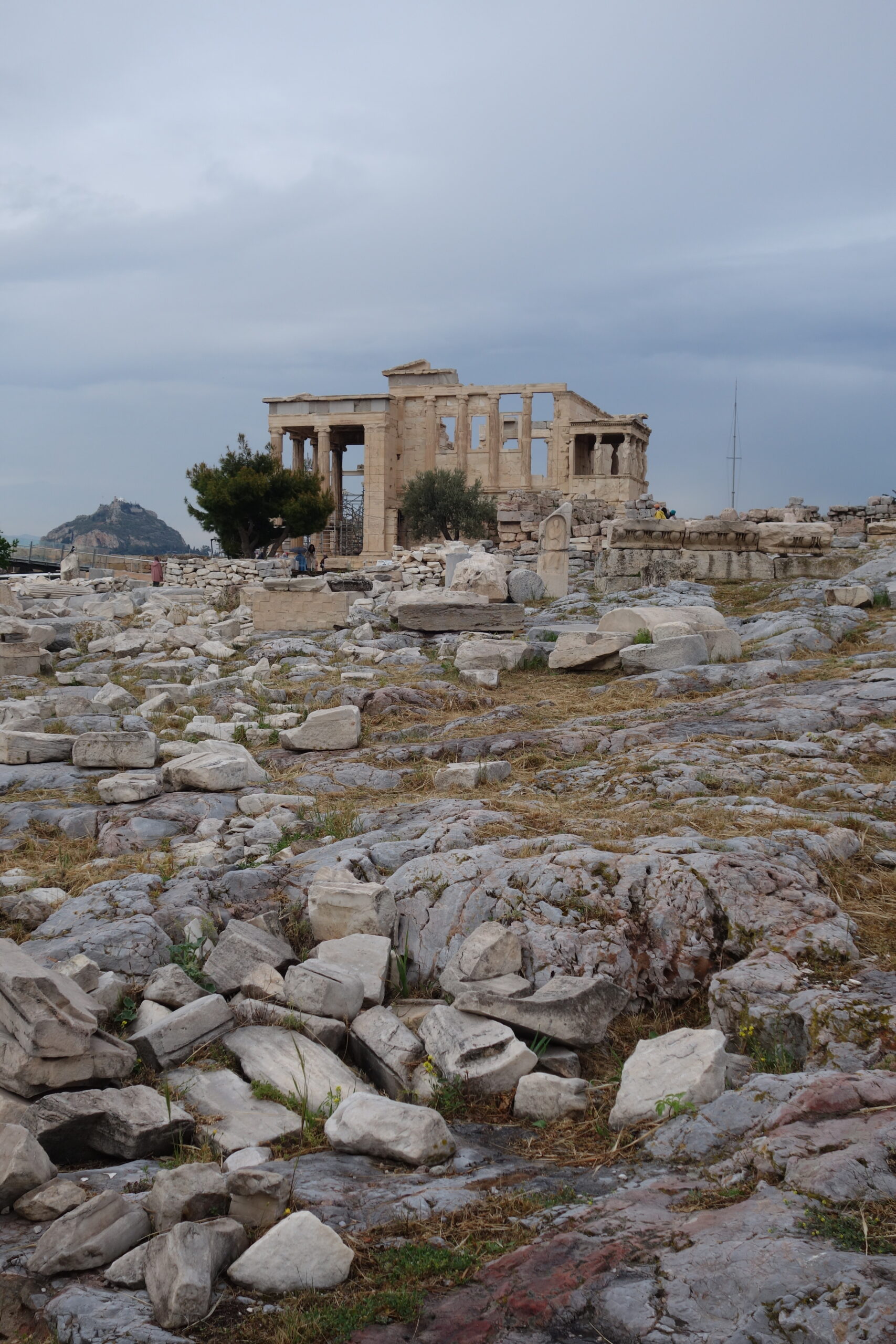
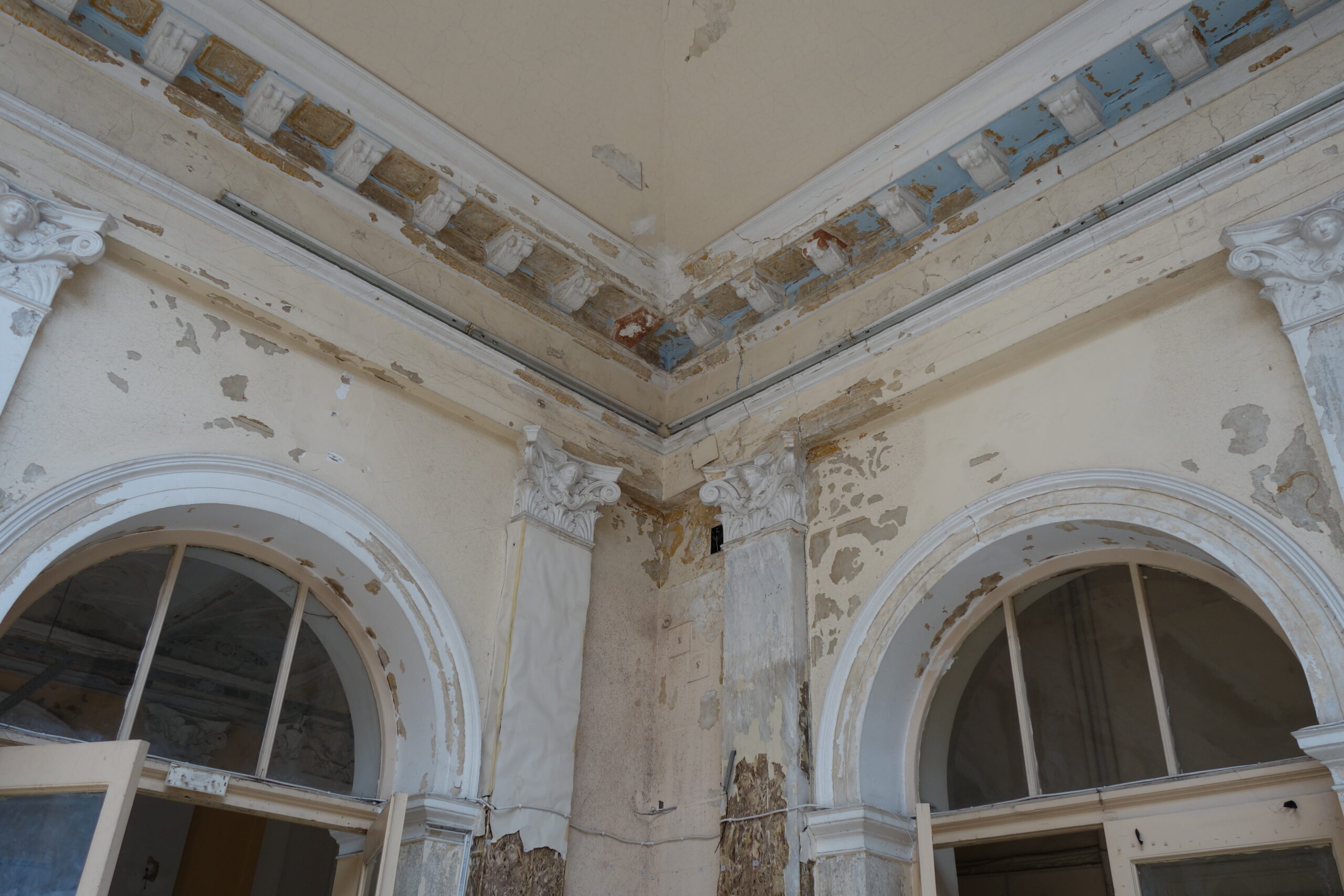
At some point in Bageion’s history, its wall and ceiling frescos were overpainted. Now, in its current state of disrepair, the white paint is chipping away, revealing glimpses of these ornate designs. When I saw this, I could not help but to think about the crumbling and plundered Acropolis, which I had visited the day before. My sense of time expanded in Greece. I could imagine a full audience in sandals and tunics when I stood in front of the Theatre of Dionysus, but time also stretched in the other direction: how will future generations view what we make today? Will it, like the Acropolis, draw 17,000 visitors daily? Robert Smithson spoke about ‘entropic architecture’ – ‘we have to accept the entropic situation and more or less learn how to reincorporate these things that seem ugly … architects build in an isolated, self-contained, a-historical way. They never seem to allow for any kind of relationship outside of their grand plan’ (Smithson and Sky, 1973). Perhaps that is one way we could think about ‘future heritage’ – giving thought to how a building will change and decay over time, designing for an audience 2000 years in the future ( however unlikely) instead of thinking in the short term. Like the Jockey of Artemision, we are unable to control the processes of nature and should instead adapt to them.
Reflecting on my trip and the theme ‘future heritage’, I began to think of buildings as containers of heritage (the Penrose Memorial Library), buildings as heritage themselves (Bageion), and in some cases buildings as destroyers of heritage (gentrification is as much a problem in Athens as it is in Dublin). These are only some initial thoughts, however, and I expect it will take a few months before I fully absorb the experiences I had in Athens. I would advise those who are planning to apply for the exchange programme next year to get involved in their local Open House festival – volunteer at more than one building, apply to lead a tour, and submit to the Visual Stories competition. The Greek volunteers I spoke to were curious to know about Dublin’s architecture. Even though I did not study architecture formally, I was able to describe Busáras and the Central Plaza, having volunteered at these buildings previously. Aside from the practical skills of knowing how to manage crowds and communicate with my team, volunteering at Open House Dublin gave me a deeper awareness and appreciation of my city’s built environment.
Journal article by Jessica Daly, written on the occasion of Open House Athens 2026 and coordinated through the Open House Europe Volunteer Exchange Programme.
References:
Smithson, R. and Sky, A. (1973) ‘Entropy Made Visible’, in Flam, J. (ed.) Robert Smithson: The Collected Writings. California: University of California Press, 301 – 310.
Photo Credits:
- Base of the statue of Athena. Photo by Jessica Daly
- British School at Athens Upper House. Photo by Jessica Daly
- Bageion multi-cultural venue designed by Ernst Ziller. Photo by Jessica Daly
- Bageion multi-cultural venue designed by Ernst Ziller. Photo by Jessica Daly