Journal •
A walk through Dublin’s Future Heritage: The Tolka Estuary Greenway
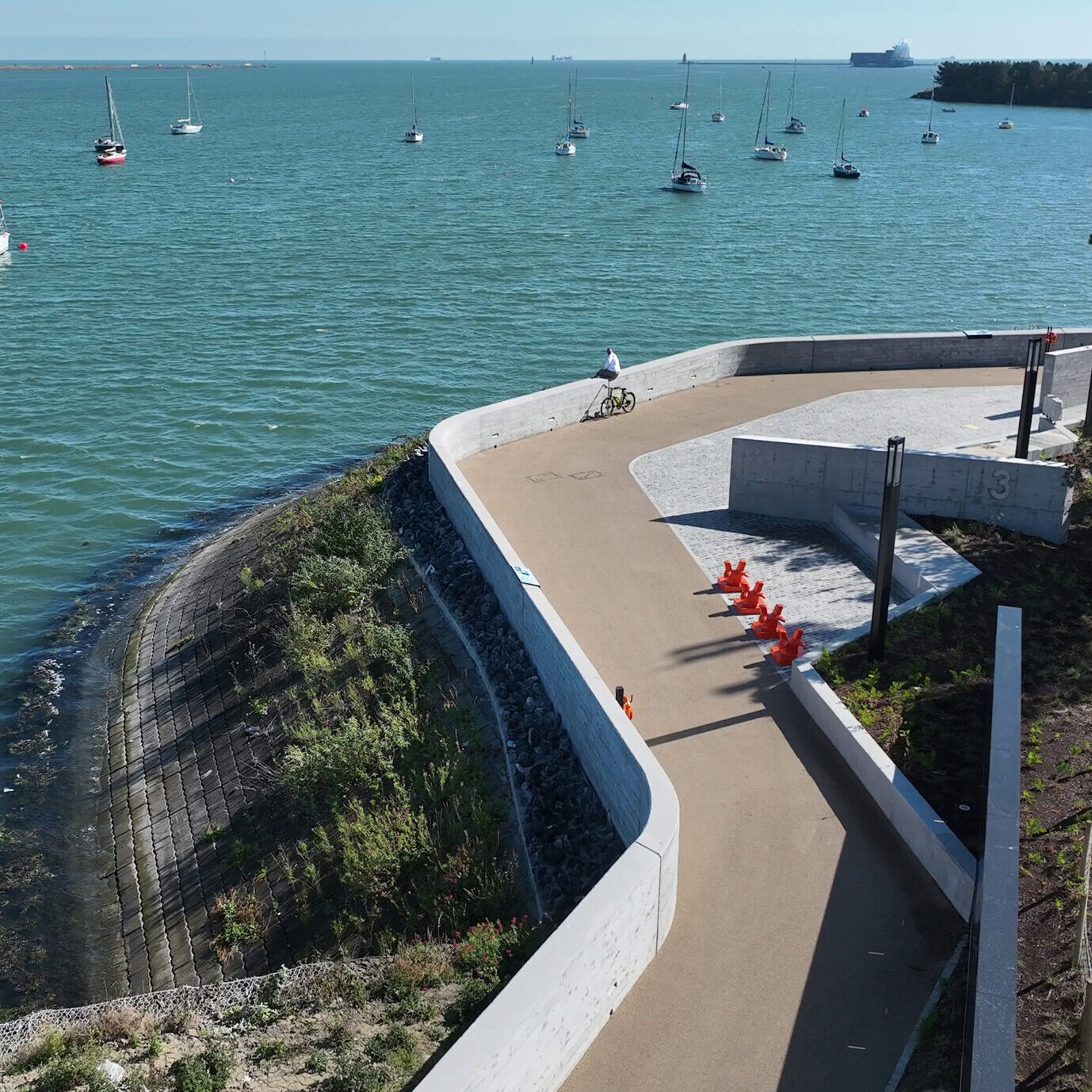
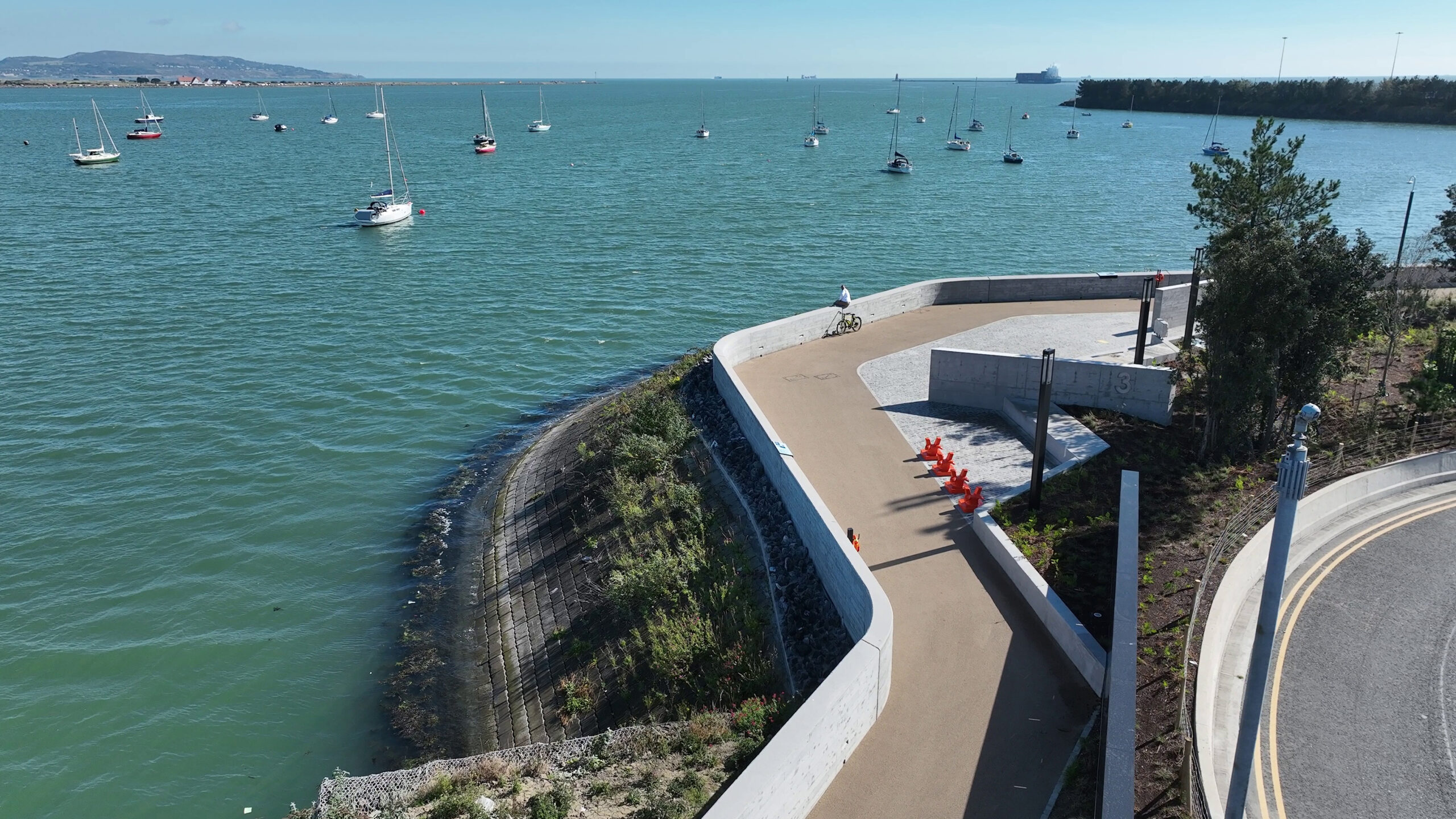
A striking, distinctive, hard edge marks Dublin Port’s north shore along the blue waters of the Tolka Estuary. This edge, long forbidden to walk upon, used to only be visible by boat or by looking south from Clontarf. The cranes, lights, and constant port activity seemed remote and inaccessible. However, in 2024, this changed, with a new seam of Dublin’s heritage opening to the public, to reveal a walking and cycling path. The Tolka Estuary Greenway was showcased during the Irish Architecture Foundation’s Open House Dublin 2025.
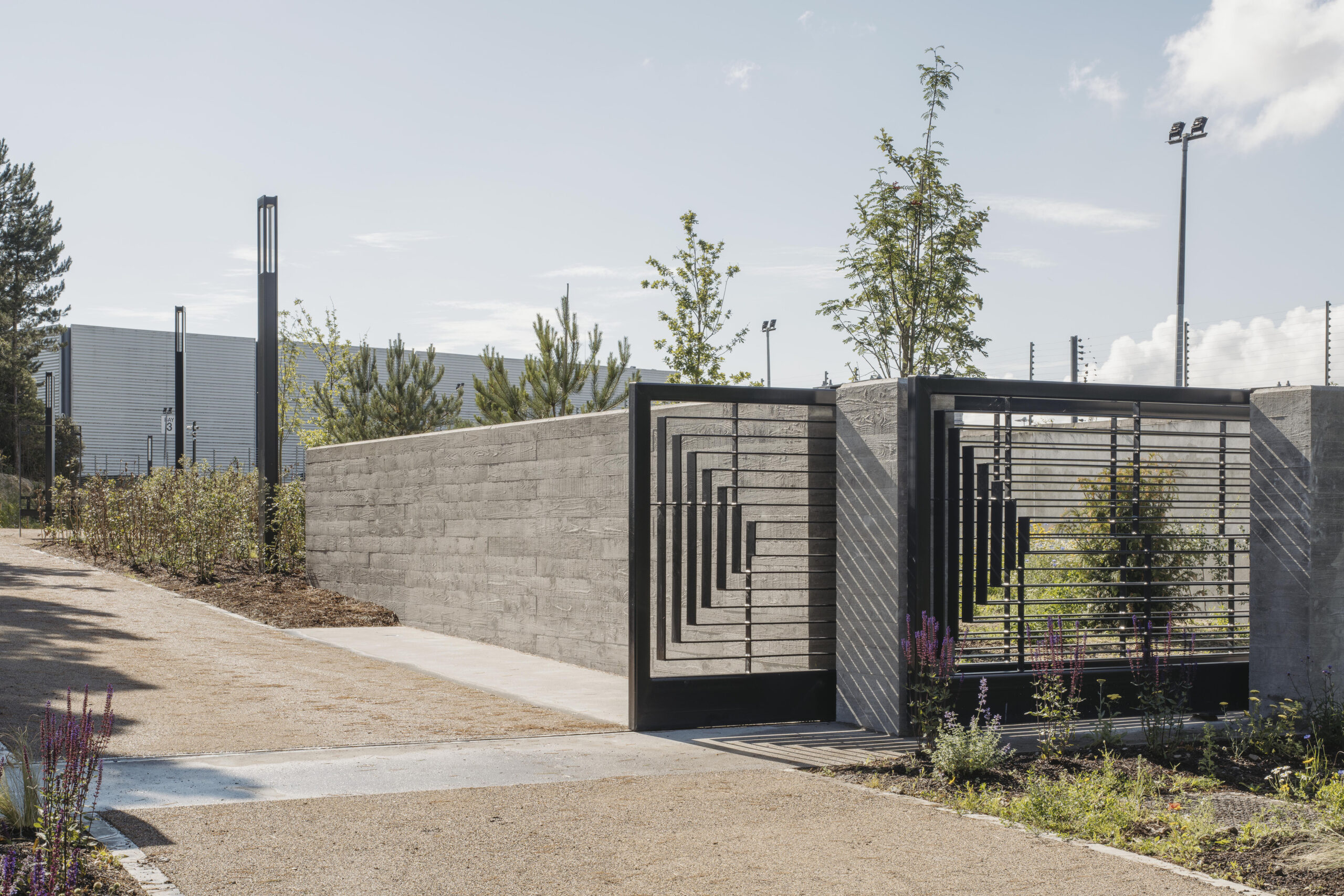
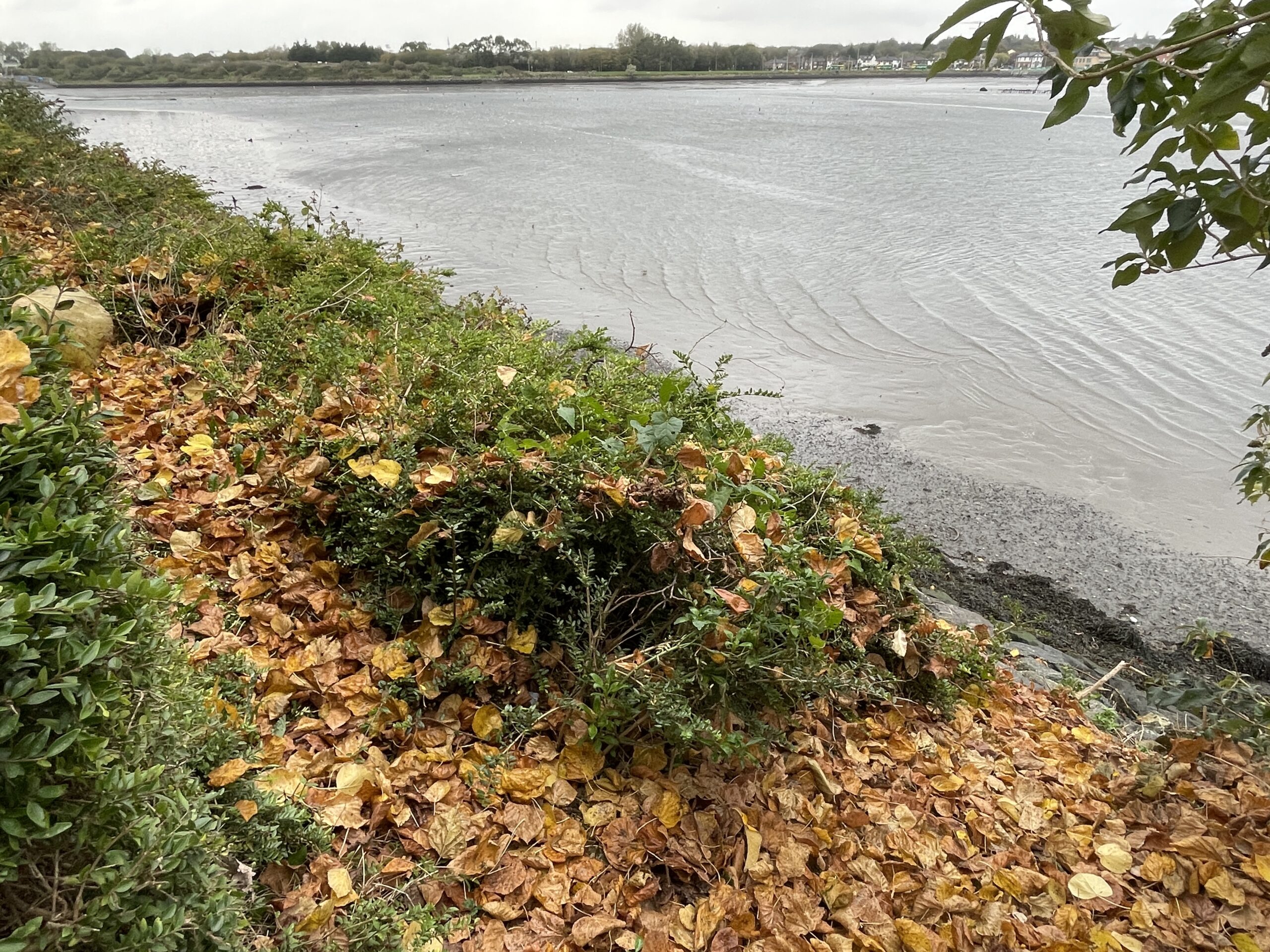
It’s both soft and hard, with a distinctive contemporary crispness courtesy of Darmody Architects’ design. TTT, the landscape architect, blended native landscape species into the design that enlivens the experience and frames views out and along the estuary’s active shoreline. Diverse bird species are visible, sometimes close-up, along with old-growth pines and wildflowers quickly spreading along the bank. Simultaneously, the Greenway hints at mysteries from Dublin’s past. Designing a shoreline for this edge required sensitivity to all of these factors.
IAF’s Open House tour was conducted by Jennifer Lynch of Darmody Architects, the design firm involved in the project. Echoing the Greenway’s overall geometry, grey stone boundaries and black iron fencing grillwork are hard-edged. The architecture is softened by marvellous green and colourful native landscaping left to thrive, providing a seasonally changing walk. At the three hard right angles of the pathway, plazas provide discovery points for groups to gather and admire panoramic views.
This 2km walking and cycling path includes abundant interpretive signage. It features a contemporary monument to Daniel O’Connell, his eye perpetually fixed upon Clontarf, across the estuary. At the Greenway’s east end, a gathering space orients the pedestrian towards the iconic Poolbeg Chimneys, which rise above the huge cruise ships docked nearby.
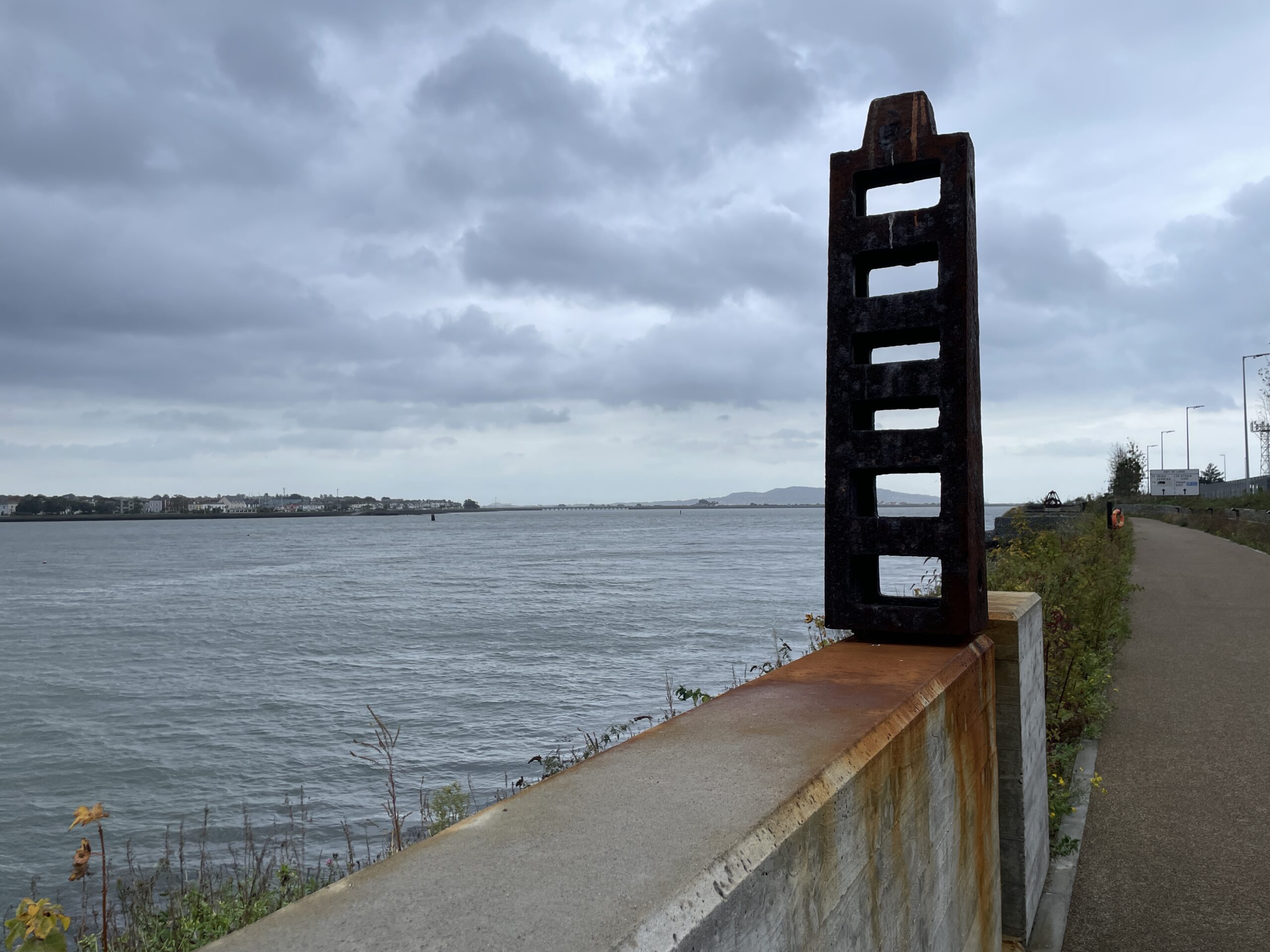
Sculptural, rust-red ship hardware of unknown utility was excavated and is exhibited along the walk, but the most mysterious objects were uncovered at the eastern discovery point. Jennifer Lynch described how infill work enlarged the land of the Port over the centuries. Excavations in recent years uncovered finely carved stone from long-forgotten city centre buildings, possibly from the Wide Streets Commission. The Commission, operating in the 18th and 19th centuries, demolished many structures in Dublin’s core.
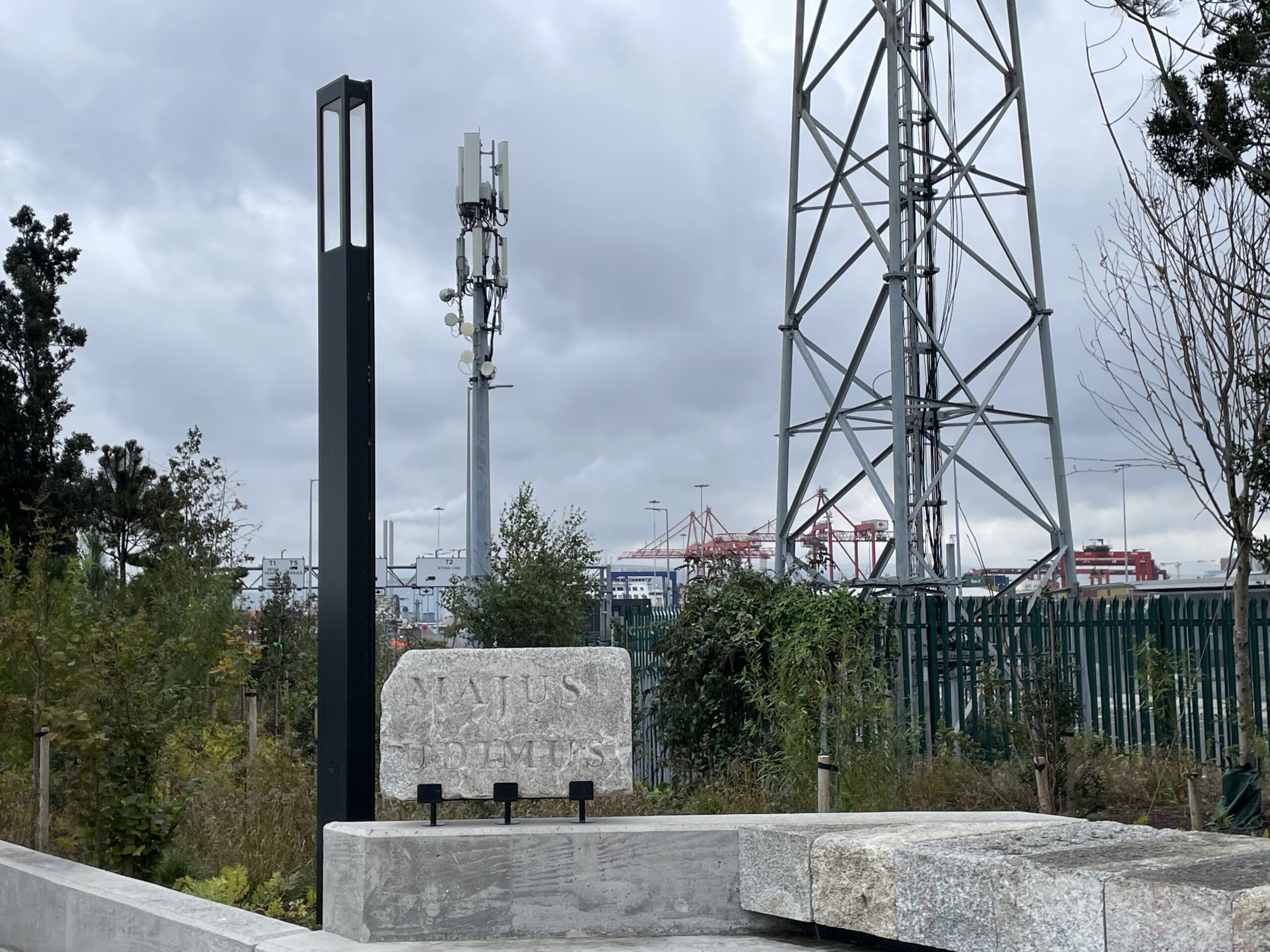
A white marble chunk is displayed from this trove, chiselled with still legible Latin. What edifice was this from, and when was it deposited into the sea? This mystery may be solved when more excavation happens, and the Port extends the Greenway to a future waterfront park. Already linked to the Dublin Coastal Trail, the Greenway’s potential to become a part of the city’s future heritage seems ensured.
Journal article by Richard Reep, an artist, writer, retired architect, and Open House Dublin volunteer
Photo Credits:
- The entrance of Tolka Estuary Greenway. Photo by Fionn McCann
- The soft greenery of the estuary shoreline. Photo by Richard Reep
- Overhead photo of the Tolka Estuary Greenway courtesy of Wills Bros
- Excavated Marine Hardware displayed on the sea wall. Photo by Richard Reep
- Building fragment with Latin inscription. Photo by Richard Reep