
Leading up to Open House Dublin, we partnered with Fighting Words to offer a series of creative writing workshops led by architecture writer Eimear Arthur.
This piece was written by one of the workshop participants, Bonnie Grogan.
It’s a Saturday morning in September and I sit and wait for the sunrise while I watch the people on Sandymount Strand.
As I watch the water ebb in and out, an elderly couple walks towards me and they stop to chat. I hear how they hate retirement but being able to stop and chat to people and walk in Sandymount Strand makes it all more bearable. This morning they are feeling energetic and are taking the 3km walk from the Poolbeg Chimneys to the Poolbeg Lighthouse. I think to myself — God, retirement must be awfully boring to spend your days walking.
I spot my neighbour running the strand, regardless of weather, to get a few moments for herself away from her busy life.
Next I hear a boy call out, “Here Tod, come here, Tod”. I look over to see a boy about age 13 playing with his dog on the beach in the damp wet sand. He had a hurl and a sliothar and he was striking the ball back and forward with his dog. I observed how he didn’t even have to keep an eye on his dog because he always knew he was following by his side. It was clear they had a deep connection.
I watch a father and daughter, walking together deep in conversation, not noticing anyone else around them.
Beside me I watch a photographer setting up his equipment getting ready for the sunrise.
I start to feel a warm glow on my face, and from the corner of my eye, I see a bright light coming from the horizon. The sun has started to rise. It seems like every shade of orange is reflecting from the sky into the sea of Dublin Bay. I watch everyone gather around to admire it. I watch everyone around me stop and pause to take this moment in. The only sounds here I hear are the soft, gentle camera clicks, songs of birds and waves crashing against the rocks. Within minutes, the sun has risen over Sandymount.
All of a sudden the moment seems to have passed and the silence and stillness lifts, the sounds seem louder and everyone starts to move again.
The father and daughter walk towards the photographer and I to look at the images on the camera. I can see the daughter is keen to leave, and I ask them their plans. They tell me about how once a month they come to Sandymount before sunrise and walk along the beach and chat, before going to a cafe on Sandymount Green. She always chooses a steak sandwich. A steak sandwich for breakfast, that’s a weird choice, I tell them. They answer back about how she don’t really like traditional breakfast and prefers a nice steak sandwich with toasted sourdough bread, onions, lettuce, and peppercorn sauce with a side of chips. I watch them leave and I hope she will enjoy her unusual choice of food — I know I couldn’t, I’m more of a baked beans type of guy.
Just as I get up to leave, the sliothar lands at my feet, with the dog shortly after it. I sit and pat the dog before the boy comes over. The boy apologises, but I say there is no need to. I hear about his Jack Russell dog, Tod, about how these are his last few days, so they are spending them enjoying all the things they like to do together. I say goodbye, and wish them both well.
As I watch the boy and dog walk to the rocks I think about what Sandymount means to people. For some it is a place to spend your last few days; a place to run and escape everyday stress; a place to photograph memorable moments; a place to walk away your retirement years; and overall a place to make memories, connections and follow traditions.
Unlocking the potential for adaptive reuse and sustainable, scalable urban transformation
By Anne Lynch, BArch, FRIAI
While researching for an MSc paper about the circular built urban environment, I discovered a significant number of contemporary studies dedicated to investigating and developing solutions to address the chronic dereliction facing our towns and cities. The climate crisis and current housing shortage have brought the issue into sharp focus. The Town Centre First strategy launched in 2022, guided and supported by the visionary 2021 New European Bauhaus (NEB) policy and associated funding initiatives — the Town Centre Heritage Revival Scheme (THRIVE) and the Vacant Property Refurbishment Grant — aspires to address the problem, but progress is slow on the ground.
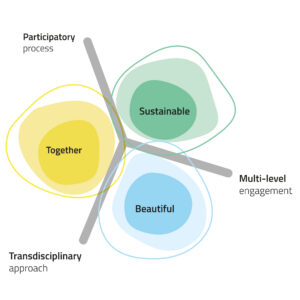
Figure 1. NEB Compass. Values and working principles (Source: NEB Toolbox, 2024, p. 2)
Ironically, a key obstacle to progress can be attributed to what is commonly known as Maslow’s hammer: “I suppose it is tempting, if the only tool you have is a hammer, to treat everything as if it were a nail” (Maslow, A.H. 1966, The Psychology of Science, p. 15-16).
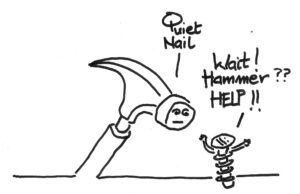
Figure 2. Maslow’s hammer (Source: Author)
The regulatory, legal and financial environment within which construction projects are delivered is primarily based on new-build activity. Unfortunately, the instruments used in this process do not always take account of the added complexity of adaptive reuse projects and can sometimes act as a development constraint. Significant modification of these tools is required to embrace the parallel process crucial to the successful adaptation of existing buildings that can lead to urban transformation.
The paper that I developed examines the logjam that interrupts the flow from policy to practice, summarises common findings from recent and ongoing national and international research and best practice and uses a participatory research approach to apply those findings to the local context of Dún Laoghaire-Rathdown (DLR) town centre. It proposes a set of awareness-building initiatives to run in parallel with and enhance ongoing wide-ranging technical research with the aim of developing a robust template of measures to accelerate urban transformation. The study is set in the context of the opportunities offered by the embryonic outreach hub of the Rediscovery Centre (RDC, the National Centre for the Circular Economy) in DLR and the adaptive reuse of two historically significant buildings in DLR under the THRIVE funding initiative.
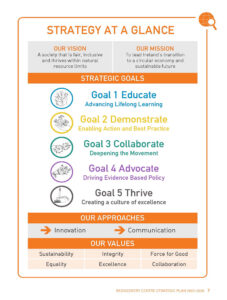
Figure 3. RDC Strategic Goals (Source: RDC Strategic Plan 2022-26, p. 7)
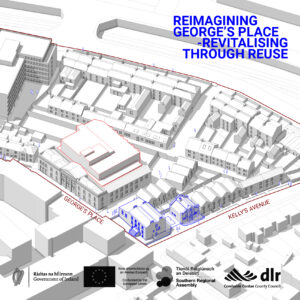
Figure 4. Reimagining George’s Place (Source: AP+E, Prescience and Livia Hurley)
The completed paper, ‘From policy to practice, unlocking the potential for adaptive reuse and sustainable, scalable urban transformation’, was submitted as part of the requirements for the MSc in Circular Economy Leadership for the Built Environment at Atlantic Technological University, Galway, in May 2026.
Open House Europe (2022–2026)
This year marks the culmination of the three-year Open House Europe project, a significant milestone in a journey that has brought together cities, communities and ideas under a shared vision of architecture as a tool for connection and change. Guided by annual themes, most recently Future Heritage, the project has explored how the built environment can respond to and is shaped by some of today’s most pressing challenges, engaging public audiences and widening participation in conversations about our shared spaces. This work continues to energise and deepen the international collaboration at the heart of Open House cities across Europe, carrying its impact forward and building on its momentum into the future.
Over the past three years, the Irish Architecture Foundation has been at the heart of Open House Europe, a collaboration connecting 27 cities through a shared exploration of architecture’s role in shaping everyday life. This growing network has come together at annual summits in Lisbon, Dublin, where we were proud to host, and most recently Athens. Each gathering offered space to exchange ideas, challenge perspectives and reimagine what architecture can do for people across Europe.
For us, this has been more than participation — it has been transformative. Hosting the Dublin summit strengthened our role as both a local and international connector, opening up new collaborations and expanding how we approach public engagement and access to the city. These exchanges have directly shaped our work, from how we programme Open House Dublin to how we position Irish architecture within wider European conversations around care, climate and the future of our cities.
Through volunteer exchanges, our community has stepped into other cities, sharing Dublin’s perspective while learning from diverse urban contexts in return. Initiatives like the Visual Stories competition have further deepened public engagement, inviting people to see and share their city in new ways.
Ultimately, this project has reinforced something central to our mission: that architecture is not just about buildings, but about connection between people and place and about making the city more open, accessible, and participatory for all. Looking ahead, it drives our ambition to deepen these international collaborations, bringing new ideas home while sharing Ireland’s voice in shaping a more inclusive and responsive future for cities across Europe.
Open House Europe was coordinated by Architekūros fondas, supported by the Lithuanian Culture Institute and co-funded by the European Union through Creative Europe.
Photo credit:
Tour of Dubin Castle State Apartments as part of the Open House Europe Summit hosted by the Irish Architecture Foundation in Dublin, January 2025. Photo by Ste Murray.
Fairy Tales and Factories: Open House Tallinn Chicken Football: Volunteering at Open House Roma Adaptive Reuse: Lessons from Open House Slovenia Entropic Architecture: Layers of History at Open House Athens A walk through Dublin’s Future Heritage: The Tolka Estuary Greenway Many Stories – One Heart: Reflections from Open House Thessaloniki Field Notes: On proximity and process with residents Against the Grain: What Dublin’s 1970s Suburbs Can Teach Us About Living Wonderful Barn: Metropolitan Workshop Bringing back homes: Coast Guard Cottages, Dún Laoghaire Harbour Revitalising through Reuse: No.9 George’s Place and Wash House Future Heritage: Building Communities That Stand the Test of Time Driving Sustainable Innovation: Kilsaran’s Commitment and Ireland’s Built Future A Single Pear Tree Sits at the Heart of these Lands TUS Coonagh Cross Campus – redefining our future by repurposing our past Drogheda Civic Offices – breathing new life into old buildings Neighbourhood Network’s vision for a more connected society A City We Shape Together – Irish Architecture Foundation Open House Europe: The Power of International Collaboration Culture Club invites people to explore Dublin’s cultural places together The New Dublin Port Greenway Opens up a new part of Dublin Bay Outhouse LGBTQ+ Centre, 105 Capel Street: A Story of Transformation Open House Vilnius – Perspectives from Dublin Open House Brno – Perspectives from Dublin Open House Prague – Perspectives from Dublin St Audoen’s Church The Dublin Architecture Guide 1937-2021 Marsh’s Library


