Journal •
Chicken Football: Volunteering at Open House Roma
As a first-year art history and architecture student, the Open House exchange promised to materialise everything I’ve studied. I was lucky enough to receive my volunteering place at Open House Rome, a city I had familiarised myself with through various architectural images of buildings in history books and lectures.
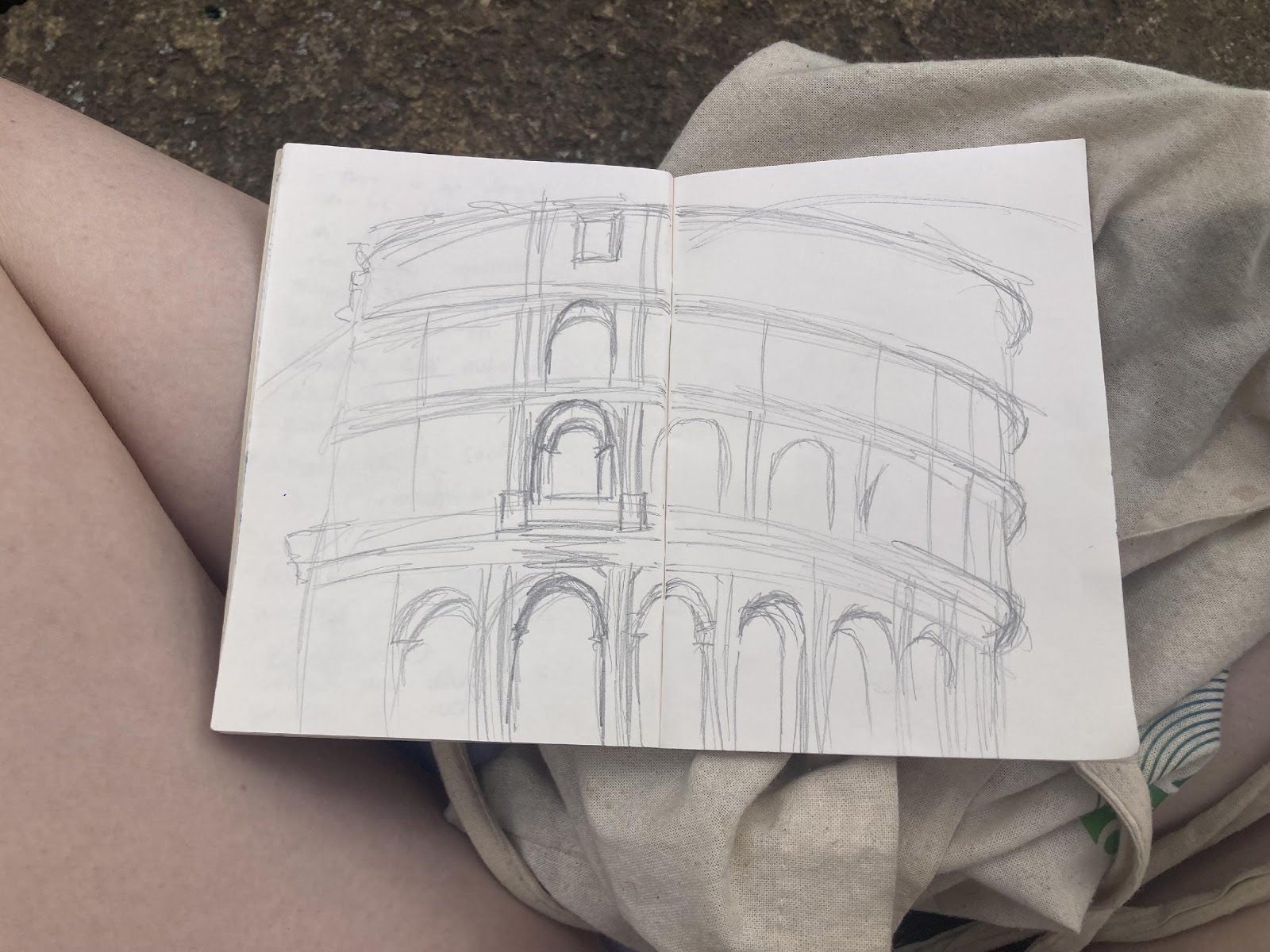
Such photos do not do the great buildings justice, and it was a truly enlightening experience to be in a city which has inspired generations of architects and thinkers alike. My hostel was only a short walk from the Colosseum, a building which, to me, was the equivalent of seeing a Hollywood movie star. The towering Tuscan, Ionic, and Corinthian columns served as a reminder of the great history of the site. I imagined the naumachia (a mock naval battle) and gladiatorial games taking place in the space, as they had for hundreds of years.
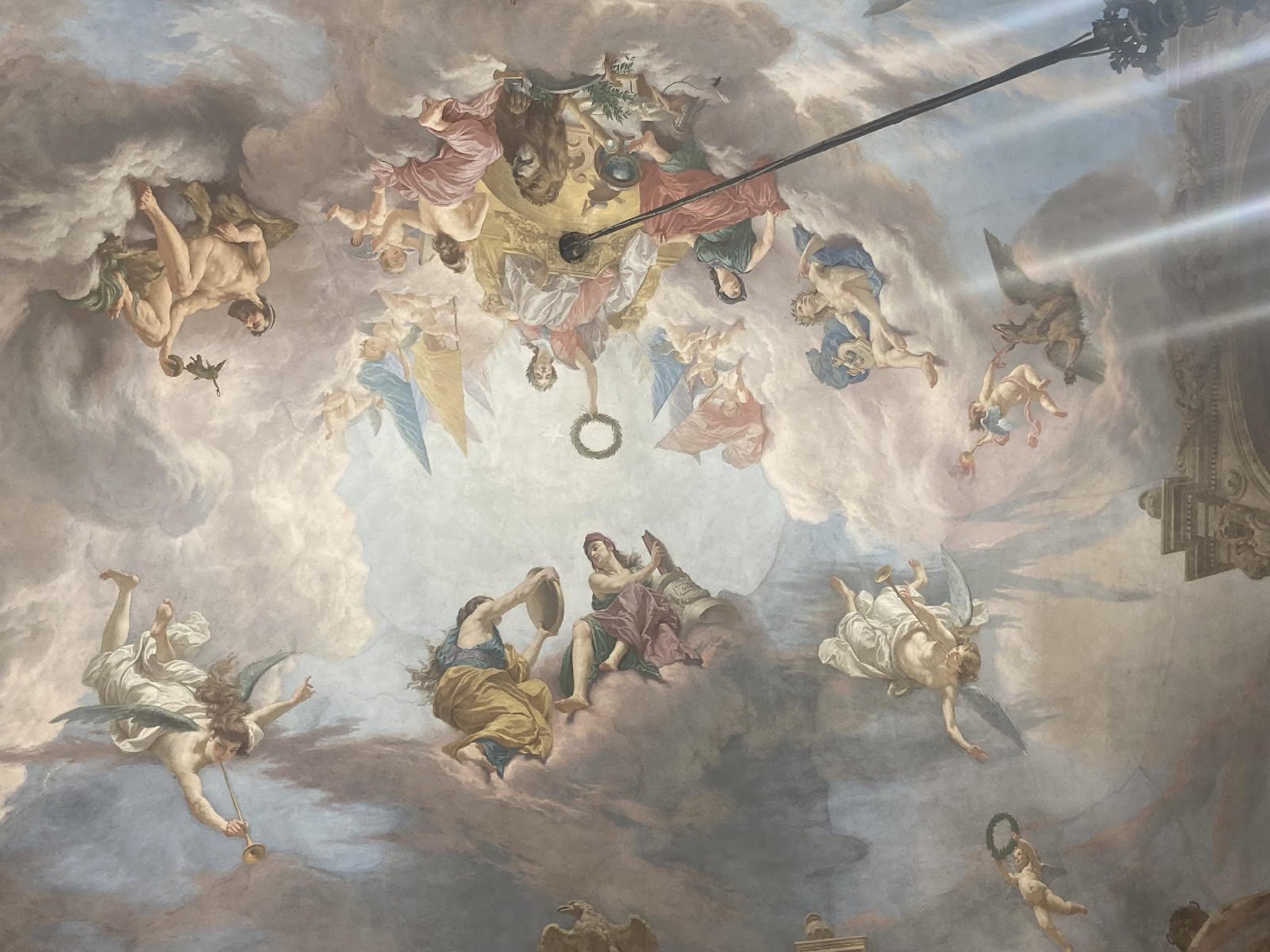
Having access to these materials of the past is a massive privilege, and for my first stewarding role at Open House Roma, I was allowed into the Palazzo delle Finanze, where a wonderful tour guide brought us through the building, not normally accessible to the public. We began the tour of this incredible building in one of the three libraries. Sun-faded financial books lined the shelves, demonstrating the underpinnings of the Italian economy. We swiftly moved on to the meeting room (my favourite), where a fantastic painted ceiling greeted us. The fresco was by Cesare Mariani. It presents an allegory of Italy, decorated by various figures from Italian history, including Dante. The walls of the room were flanked by sculpted women, caryatid pilasters, and above them, various entablature details. One of the stone women, a representation of agriculture, holds a chicken in her arms. Other rooms include coffered ceilings, stained glass and painted crests. Hidden in the middle of the Palazzo was a square surrounding a water fountain.
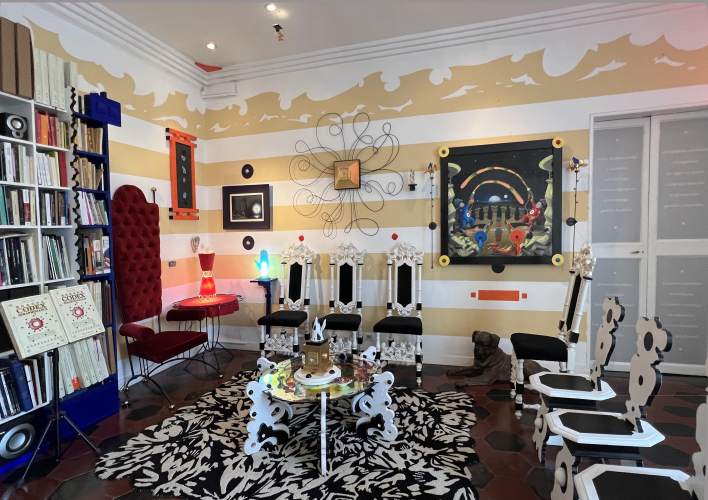
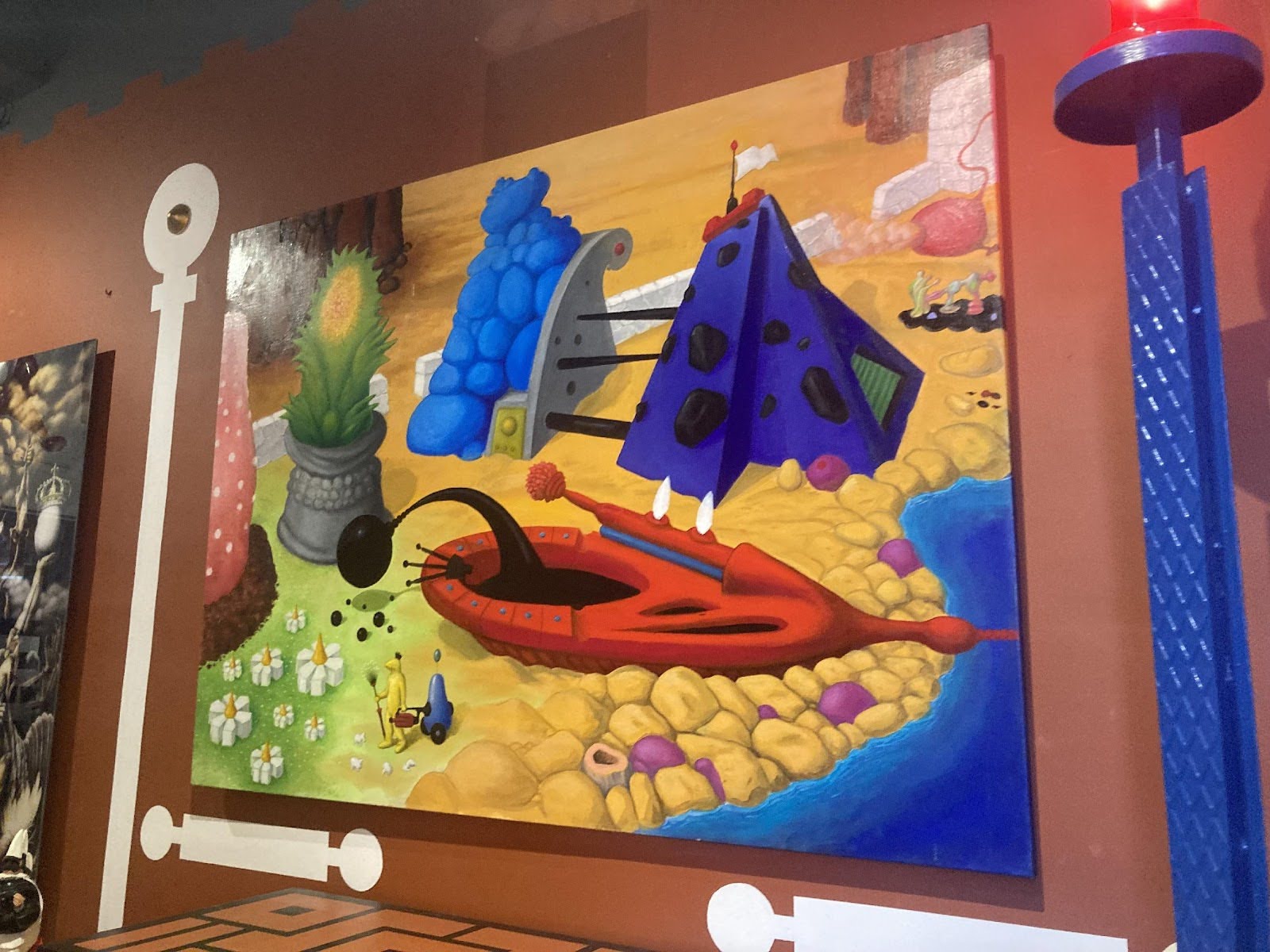
More contemporary buildings provided an interesting contrast in this historic city. My second day I volunteered at the colourful abode of the artist Luigi Serafonzi, Casa Studio. Entering this space was like travelling to another planet. Installations such as a chicken football game (where eggs took the place of the football) and a large plastic deer mounting the bookshelves inhabited the bizarre rooms. The shelves housed great surrealist minds, which were clearly an influence on the imaginative work of Serafonzi. The artist acted as the guide, and although my Italian is not what it should be, judging by the laughter of the guests, it is clear his sense of humour expanded past his artworks. One visitor even had tattoos of one of his paintings, a real testament to inspiration.
My experience at a local level revealed to me the type of people interested in this programme: I met very interesting people and made friends through our shared love of art and architecture. This is a really big part of the experience as the people who get involved are honestly great to be around; it’s not every day that one can discuss beautiful buildings with one’s peers!
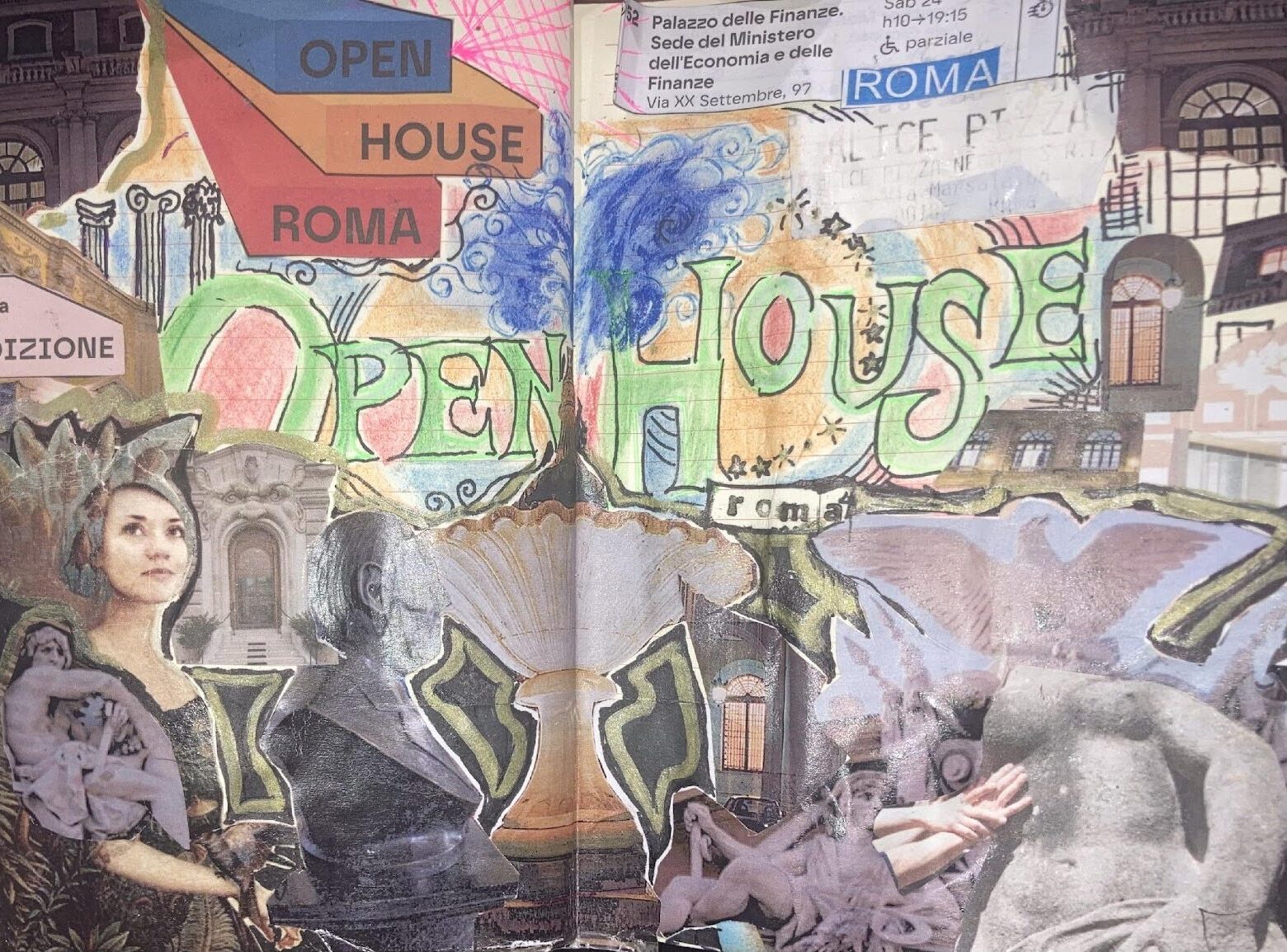
I developed my own relationship with architecture as a means of inspiration a little more. In Rome I drew and scrapbooked various aspects of the buildings I saw, translating the architecture around me into my own language. It served as a great wealth of knowledge for further research in my academic year, and of course, some summer reading.
Through this experience, I discovered that buildings hold the potential to surprise you. You never know what may be hiding in unsuspecting buildings, as I certainly did not expect the painted vaults of the Palazzo delle Finanze. I learnt how one’s own house is a playground for experimentation, the only limit being one’s imagination. Architecture doesn’t always need to be rooted in tradition and history: it is malleable.
I also learnt that architects themselves represent a vast scope of talents, as I spoke to artists, mathematicians and civil engineers. This also allowed me to look into the kaleidoscope future of what my career could look like.
In a world of war and disconnect, we are privileged enough not only to look at and study buildings but also have the opportunity to do it abroad.
If I were to advise anyone planning to visit or volunteer at another Open House festival, I would firstly tell them to be inspired by their surroundings in whatever way that manifests. There is a reason you’re drawn to architecture, so let yourself get lost in the details and labour of the thinkers who came before you.
Secondly, I found joy in using walking as my primary mode of transport: I stumbled upon so many triumphal arches, fountains and other beautiful architectural archeological sites. It made me appreciate the city’s layout and history.
Finally, I discovered that having fun and being organised are more connected than I thought. Approach the trip with the philosophy of Anthony Bourdain – experience the city like a traveller, not a tourist. Ask locals for recommendations, research places to visit and try some local cuisine. Rome wasn’t built in a day! So appreciate the past and present of wherever you’re fortunate enough to journey to.
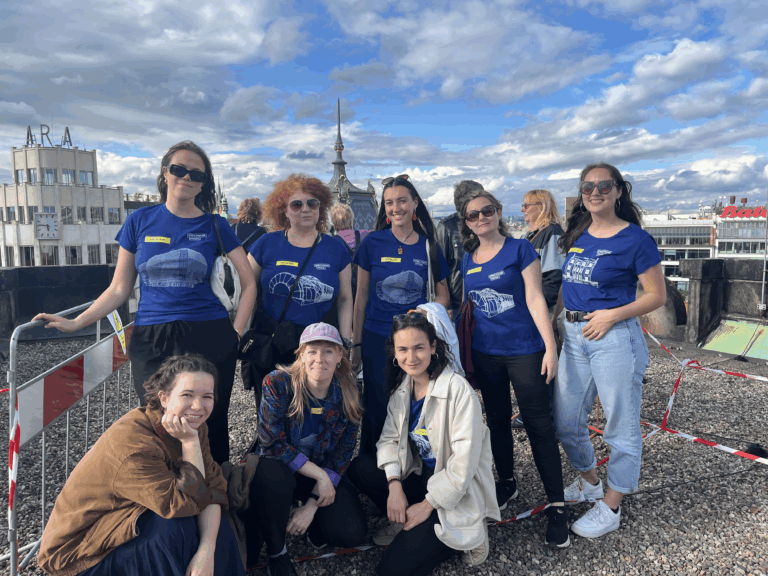
Journal article by Síofra Corrigan, a student at Trinity College Dublin, studying French and History of Art and Architecture, and Open House Dublin volunteer. Written on the occasion of Open House Roma, coordinated through the Open House Europe Volunteer Exchange Programme.
Photo Credits:
- A rough sketch of the Colosseum by Síofra Corrigan. Photo by Síofra Corrigan.
- Detail from Cesare Mariani’s fresco in the Sala della Maggioranza. Photo by Síofra Corrigan.
- Interior of Luigi Serafini’s Casa Studio. Photo courtesy of Open House Roma.
- A page from Síofra’s sketchbook. Photo by Síofra Corrigan.
- A painting in the home of Luigi Serafini, by himself. Photo by Síofra Corrigan.